


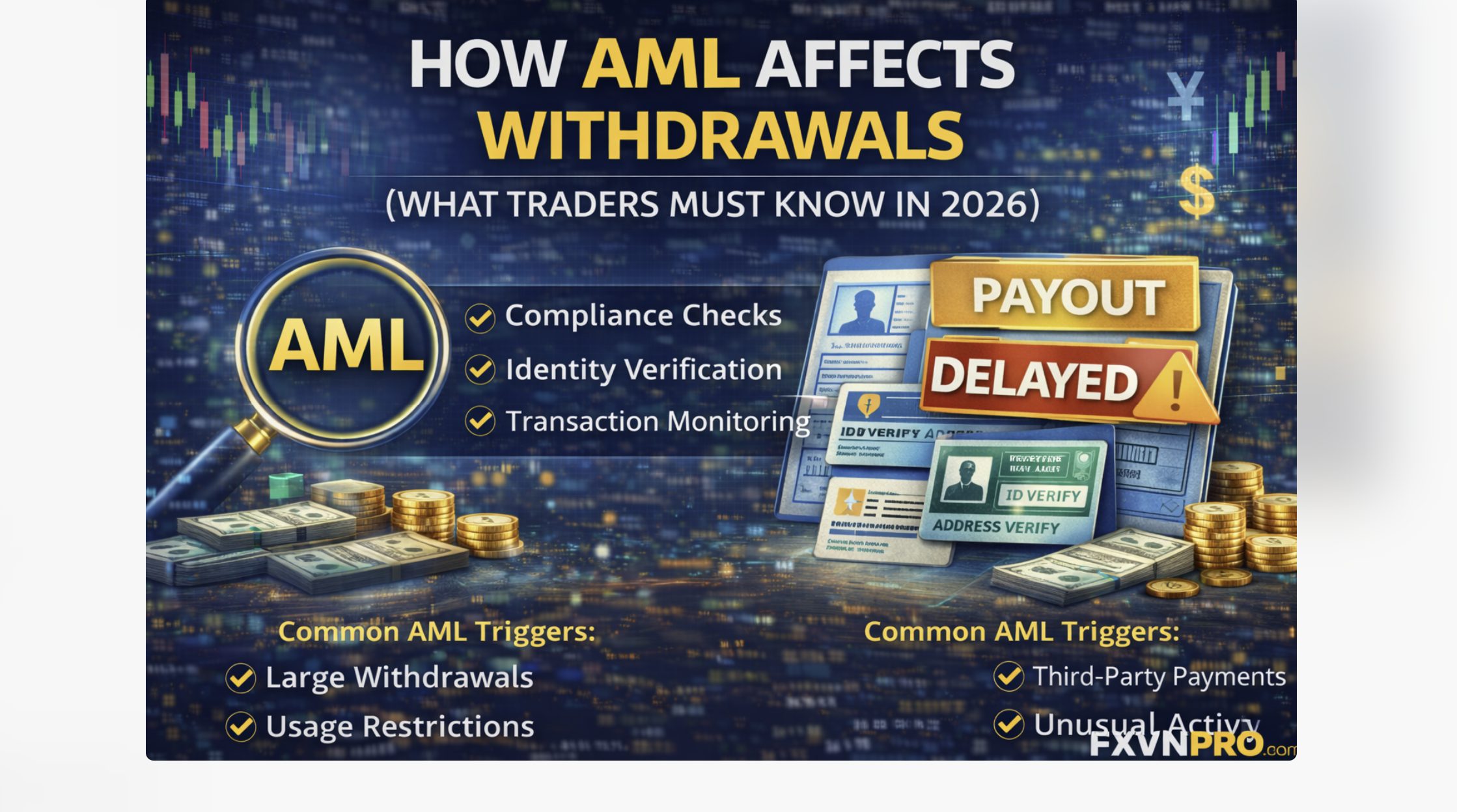
How AML Affects Withdrawals (What Traders Must Know in 2026)
Updated 2026 • Compliance & Regulation Analysis • ReviewBrokers.net
In this 2026 guide, we explain:
- Why AML checks affect withdrawals
- Common triggers for compliance reviews
- Required documentation
- How to avoid payout delays
What Is AML in Forex Brokerage?
AML (Anti-Money Laundering) refers to regulatory rules requiring brokers to monitor, verify, and report suspicious financial activity.
Under global regulations, brokers must:
- Verify client identity (KYC)
- Monitor unusual trading patterns
- Track source of funds
- Report suspicious transactions
AML enforcement is especially strict in Tier-1 jurisdictions.
See our regulatory breakdown:
How Broker Regulation Works in 2026
Why AML Checks Happen During Withdrawals
Deposits are typically processed automatically. Withdrawals, however, trigger compliance review.
| Stage | AML Risk Level | Broker Action |
|---|---|---|
| Account Opening | Medium | ID & Address Verification |
| Deposit | Low–Medium | Payment Method Match |
| Withdrawal | High | Full AML Review |
Withdrawal is where funds leave the system, making AML scrutiny highest at this stage.
Common AML Triggers That Delay Withdrawals
- Large withdrawal compared to deposit
- Multiple payment methods used
- Third-party deposits
- Unusual trading volume spikes
- High-risk jurisdiction transfers
Even profitable trading activity can trigger review if it deviates from normal account behavior.
Required Documents for AML Verification
| Document Type | Purpose |
|---|---|
| Government ID | Identity confirmation |
| Proof of Address | Residency verification |
| Bank Statement | Source of funds validation |
| Payment Method Screenshot | Ownership confirmation |
Failure to provide requested documents can result in delayed or rejected withdrawals.
How Long Can AML Reviews Take?
Typical timeframes in regulated brokers:
- Standard withdrawal: 1–3 business days
- AML review triggered: 3–10 business days
- Enhanced due diligence: 2–4 weeks
Offshore brokers may take longer and provide less transparency.
AML vs KYC: What’s the Difference?
| KYC | AML |
|---|---|
| Identity verification | Ongoing transaction monitoring |
| Done at onboarding | Triggered throughout account lifecycle |
| Basic compliance | Risk-based compliance framework |
KYC is part of AML, but AML goes beyond initial verification.
How to Avoid AML Withdrawal Delays
- Use one consistent payment method
- Avoid third-party deposits
- Complete full KYC early
- Keep trading patterns consistent
- Choose Tier-1 regulated brokers
Execution model and broker infrastructure also matter:
How Forex Broker Infrastructure Works
Are AML Delays a Red Flag?
Not necessarily.
AML checks are legally required in most regulated jurisdictions. However:
- Lack of communication is a warning sign
- Repeated unexplained delays are concerning
- Unregulated brokers pose higher risk
See our broker evaluation framework:
How We Evaluate Forex Brokers (2026 Methodology)
Final : AML & Withdrawals in 2026
AML regulations are stricter than ever in 2026.
While withdrawal reviews can be frustrating, they are often a sign of regulatory compliance rather than fraud.
- Regulated brokers → Structured AML checks
- Offshore brokers → Inconsistent policies
- Transparency matters more than speed
Before opening an account, always review:
- Broker regulation status
- Withdrawal policy transparency
- AML & compliance terms
Understanding AML procedures protects both brokers and traders — and helps avoid unnecessary payout delays.